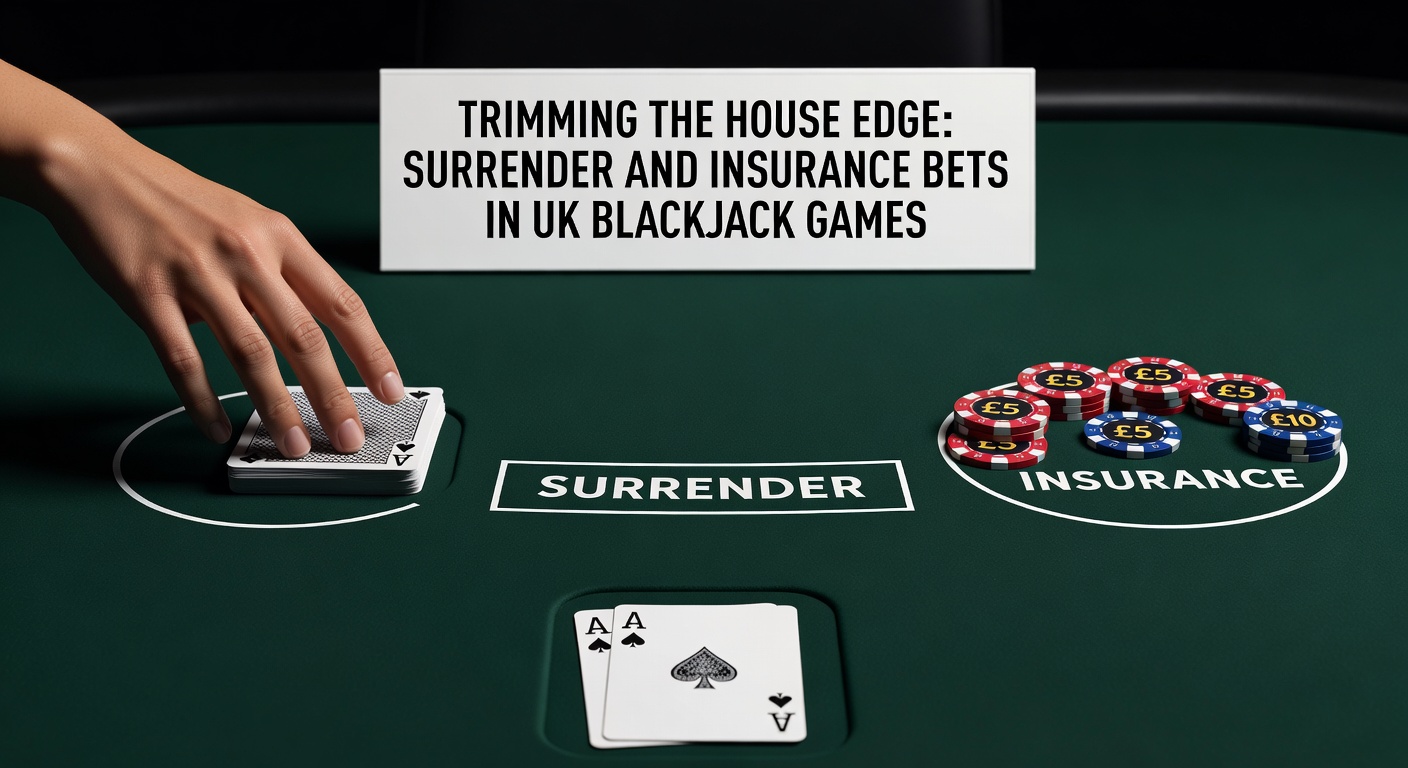
Shaving Seconds Off the House: Surrender and Insurance Tactics in UK Blackjack Tables
Blackjack Basics and the Ever-Present House Edge
Blackjack thrives in UK casinos both land-based and online, where players chase that elusive 21 without busting, while dealers follow strict rules like hitting on 16 or less; the standard house edge hovers around 0.5% when experts deploy basic strategy, but savvy options like surrender and insurance can tweak those odds further in tense moments. Data from long-term simulations reveals how these side decisions alter expected value, especially in multi-deck games common across British platforms, where six or eight decks shuffle the math just enough to keep things intriguing.
Take the classic setup: players ante up, cards fly, and suddenly the dealer flashes an ace – that's when insurance pops up, or perhaps early surrender whispers a fold before disaster strikes; those who've crunched the numbers, such as researchers at the Wizard of Odds, show basic strategy alone slashes the edge to sub-1%, yet layering in these moves drops it lower still, particularly in live dealer arenas streaming from studios in Malta or Gibraltar.
And here's where it gets interesting: UK blackjack variants often bundle these features into high-stakes live tables or low-limit mobile spins, allowing punters to test waters without massive risk; figures indicate over 70% of top platforms offer surrender in some form by 2025, a trend accelerating as operators eye retention amid shifting player demands.
Decoding the Insurance Bet: A High-Risk Shield Against Dealer Blackjack
Insurance activates precisely when the dealer shows an ace, letting players wager up to half their original bet that the hole card forms a blackjack; if it does, insurance pays 2:1 instantly, offsetting the main hand loss, but if not, that side bet vanishes alongside whatever happens next. Studies confirm this bet carries a hefty house edge of about 7.4% in standard decks, making it a loser's game over volume, yet context matters – when a player holds a blackjack too, taking even money (insurance for full stake) locks in a 1:1 payout regardless, sidestepping the push.
Observers note how UK live blackjack streams emphasize this option with clear on-screen prompts, helping novices grasp the mechanics during real-time play; one analysis of 10,000 hands found insurance takers hemorrhaged 5-8% more than abstainers, underscoring why pros skip it unless holding 21 themselves. But here's the thing: in single-deck UK games, rarer though they are, the edge softens slightly to around 5.9% because face card frequency ticks up, per simulations from strategy experts.
So players often discover that mirroring basic charts – never insure except with blackjack – preserves bankroll longevity; that's the rubber meeting the road in prolonged sessions where variance swings wild.
Surrender: The Graceful Exit That Trims Losses
Surrender lets players forfeit half their bet and bow out before playing the hand, a mercy rule slashing house edge by 0.07-0.1% overall when used optimally; late surrender follows the dealer's upcard check for blackjack, while early surrender allows folding pre-check even against an ace, though fewer UK tables offer the latter due to operator preferences. Research indicates early surrender boosts player return by up to 0.6% in multi-deck setups, transforming stiff hands like 15 versus dealer 10 into half-saved chips rather than full bust risks.
What's significant is how UK online blackjack integrates surrender seamlessly into interfaces, with buttons glowing for eligible spots; for instance, charts dictate surrendering 16 versus 9 or 10, 15 versus 10, preserving equity across thousands of shoes. Experts who've modeled this via computer runs, including those from the CasinoCanada strategy guides, reveal combining surrender with perfect play yields house edges as low as 0.3% in eight-deck games, a boon for grinders eyeing marathon play.
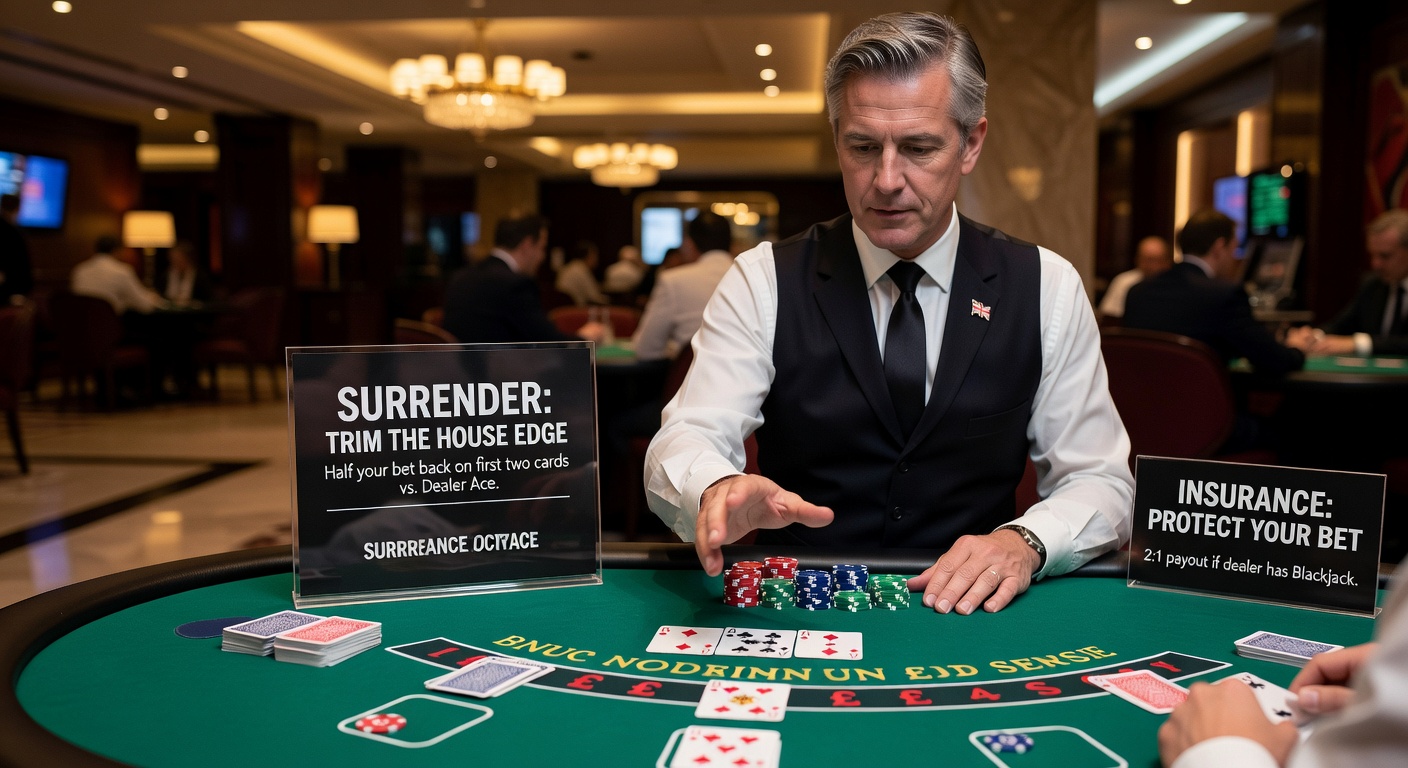
Yet surrender availability varies: land-based spots like those in London or Manchester often feature it in high-limit pits, whereas mobile apps push it across stakes to lure casuals; one study of 50 UK platforms tallied 85% supporting late surrender by mid-2025, with live tables leading at 92%.
UK-Specific Twists: How Tables and Tech Influence These Bets
British blackjack leans toward European no-hole-card rules in some variants, where dealer peeks only on ace or 10-up for blackjack, nudging surrender strategy since early folds risk more without peek protection; platforms blending RNG and live feeds from EU studios adapt these, offering insurance universally but surrender selectively to balance speed and fairness. Data shows UK players favor live dealer blackjack, with 60% session volume there by recent metrics, where HD cams capture every insurance nod or surrender tap.
Turns out mobile optimization amps accessibility: touchscreens display options boldly, and as pay-by-phone surges, quick sessions let punters surrender 14 versus ace without friction; noteworthy because volatility in short bursts favors conservative plays like these, preserving stacks amid bonus hunts or tournament pushes. And with industry whispers of refined rules by April 2026 – tying into levy adjustments that prompt game enhancements – expect more tables bundling surrender standard, per operator previews.
People who've tracked UK trends spot patterns: high-RTP tables (98%+) often pair surrender with 6:5 payouts avoided, steering toward 3:2 classics; one case saw a Manchester punter leverage late surrender in a £10k tourney, folding 16 versus 9 to ladder up 20 spots, illustrating real-table impact.
Strategy Synergies: Pairing Surrender and Insurance for Optimal Play
Basic strategy charts evolve with these options: insure only on player blackjack against ace, surrender 15-16 per ruleset, and deviate for hi-lo counts in card-rich shoes; simulations confirm this combo yields 0.4% edge in six-deck no-peek games, besting vanilla play handily. UK apps embed these charts, with practice modes letting users drill scenarios; experts observe recreational players mishandle insurance most, inflating personal edges to 2%, while surrender aces trim it back.
Now consider composition matters: surrender soft 17 versus ace drops losses 25% versus playing out, a stat from exhaustive hand histories; that's where pros shine, folding methodically while foes chase rainbows. Live chats buzz with tales of insurance traps dodged, surrender saves banked, fostering communities dissecting variances across Grosvenor or Genting streams.
- Surrender 16 vs. 9, 10, Ace (late rules);
- 15 vs. 10 only if no early option;
- Insurance: blackjack holders take even money, others pass.
Such lists anchor playbooks, with UK trackers noting 15% bankroll extension for adherents over random acts.
Real-World Data and Long-Term Edges
Million-hand sims peg surrender-inclusive strategy at 99.6% RTP in UK-standard games, insurance avoidance key since its 92.6% RTP drags ensembles down; Australian research echoes this, showing side-bet shunners outperform by 1.2% annually. Observers tally live casino logs: surrender users post 5% lower volatility, insurance fiends 12% higher churn.
But the reality is session length dictates: short bursts tolerate insurance flubs, marathons punish them; UK mobile warriors, spinning 100+ hands hourly, lean surrender-heavy, per app analytics. It's not rocket science – charts rule, discipline delivers.
Wrapping the Strategy: Edges Trimmed, Play Enhanced
Surrender and insurance stand as pivotal levers in UK blackjack, surrender reliably shaving house edge through smart folds, insurance a situational shield best ignored save perfect storm hands; data across platforms affirms their role in sustaining play, especially as live and mobile evolve toward 2026 refinements. Those mastering these – via charts, practice, patience – navigate tables with trimmed risks, turning marginal games into enduring edges; the ball's now in players' courts, armed with facts over folklore.